
An open letter signed by concerned university academics argues that the public case for AUKUS has yet to be made, and calls on the government not to proceed with the development of a nuclear-powered submarine (SSN) capability for Australia until issues raised are addressed.
Read moreCategory: International relations

Warriors, war and Mike Pezzullo’s ANZAC Day message
What are the ‘drums of war’ that senior Australian public servant, Michael Pezzullo, can hear? His words have been understood as echoing anti-China warmongering found among some commentators and hinting strongly at the current hysteria around Taiwan. So how did the Australian government deal with a senior public servant stepping into the political limelight in this way?
Read more
Democracy militant: strategic autonomy and Europe’s lessons for Australia
The Europeans won’t join with the like-minded allies massing behind America’s banner of democracy militant. While they will add theirs to other voices standing up for human rights, international laws and norms, and multilateralism, the EU won’t follow Biden’s clarion call into an all out multi-spectrum confrontation with China. Is there a lesson here for Australia?
Read more
Why South Korea is balking at ‘the Quad’
This article explores the reasons why South Korea has been unwilling to join ‘the Quad’, suggesting that here the issue is not just about balancing diverging economic and security interests, but the reality that progressing South Korea’s key security priority – North Korea – requires a more accommodating approach to China.
Read more
Even after Trump, it’s still hard to be America’s ally
In ‘It’s still hard to be America’s ally’, Richard Fontaine writes about the post-Trump challenges for US allies. Biden’s welcome celebration of US alliances, he writes, raises its own set of ambiguities and contradictions which pose new dilemmas for long-term allies.
Read more
Dealing with a China that’s not like us: benign or malign competition?
The Biden administration’s approach to China is shaping up as a continuation of the Trump administration’s “strategic competition”. But will strategic competition with China under Biden mean a shift from the malign competition – where each country seeks to undermine rather than outperform the other – that was typical under Trump towards a more benign competition?
Read more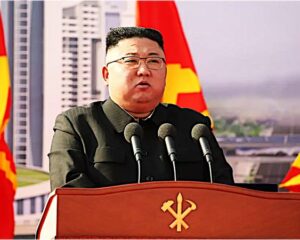
Biden ‘consulting with allies’ on response as North Korean missile tests confirmed
It is reported that North Korea’s claim that it had launched a new type of tactical short-range ballistic missile has highlighted military advances by the nuclear-armed state and propelled it to the top of new U.S. President Joe Biden’s foreign policy agenda.
Read more
US-China talks: ‘tough and direct’ or ‘candid, constructive and beneficial’?
Two-day talks between the US and China, the first under the Biden administration, concluded on 19 March 2021. The unusual exchanges between the delegations were showcased the nature of the tensions between the world’s two largest economies.
Read more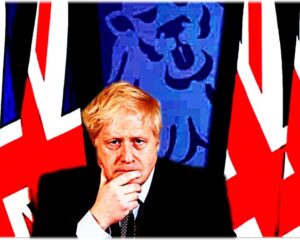
‘Global Britain in a Competitive Age’: UK’s new security, defence and foreign policy
The UK’s much anticipated new security, defence and foreign policy paper, Global Britain in a Competitive Age, sets out the government’s overarching national security and international policy objectives. Reviews have been mixed.
Read more
Russia hosts Afghanistan peace talks with US, NATO troop withdrawal deadline looming
Russia is to host on Thursday [18 March 2021] the first of three international conferences aimed at jump-starting a stalled Afghanistan peace process ahead of a May 1 deadline for the final withdrawal of U.S. and NATO troops from the country.
Read more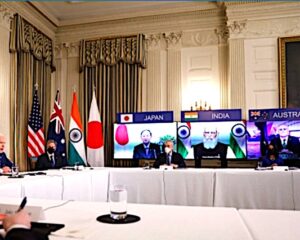
‘Quad’ repurposed for, amongst other things, vaccine diplomacy contest
Leaders of the United States, Japan, India and Australia have launched “a landmark partnership to further accelerate the end of the COVID-19 pandemic” in a move widely interpreted as an effort to counter China’s influence in the Asia-Pacific region.
Read more
Turkey, Russia, Qatar foreign ministers push for political resolution in Syria
Turkey, Russia and Qatar are making a joint attempt to promote a political solution to Syria’s 10-year conflict. The foreign ministers of the three countries held talks in Doha on Thursday, 11 March 2021.
Read more
Russia, China sign memorandum on lunar research station
It’s reported that Russia and China signed an agreement on Tuesday [9 March 2021] to set up an international lunar research station. The project aims to promote international cooperation and offer equal access to any nation that wants to take part.
Read more
Biden joining summit with key Asia-Pacific ‘Quad’ leaders
US President Joe Biden will join with the leaders of Japan, India and Australia on Friday this week [12 March 2021] at a virtual gathering of the “Quadrilateral Security Dialogue”.
Read more
‘Bloat and warfare’: the Hunter class frigate and the trend toward ever-more complicated and expensive weapons
Why do weapons platforms keep getting bigger, more complicated, and more costly? In ‘Bloat and Warfare’ Jacob Parakilas makes some interesting observations about Canada’s new frigates, which are, like Australia’s proposed Hunter class frigates, based on the BAE Systems Type 26 frigate design.
Read more
ASEAN: central to whose vision for the Indo-Pacific?
Australia places ASEAN “at the heart of our vision for the Indo-Pacific”. But a powerful dynamic, unrelated to the Indo-Pacific concept, is drawing ASEAN countries closer to China. In future, Southeast Asia may at best be neutral, or may possibly be more closely aligned with China. ASEAN could then be central to China’s “vision”.
Read more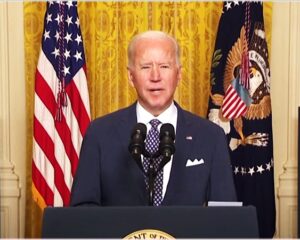
Biden at Munich Security Conference: America and NATO are back
A special edition of the annual Munich Security Conference took place on 19 February 2021, with presentations from US President Joe Biden, German Chancellor Angela Merkel and French President Emmanuel Macron and other speakers.
Read more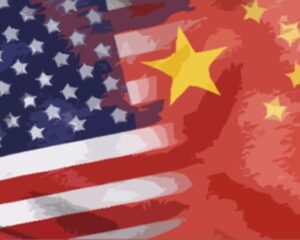
Biden’s top foreign policy challenge: avoiding a cold war with China
The Biden administration faces a host of difficult problems, but in foreign policy its thorniest will be its relations with the People’s Republic of China. How the new administration handles issues of trade, security, and human rights will either allow both countries to hammer out a working relationship or pull the U.S. into an expensive — and unwinnable — cold war. But there are a number of moves both countries could make to avoid this.
Read more
Pentagon’s China task force to review strategy toward China
In remarks to Defense personnel on Wednesday, 10 February 2021, US President Biden said that a Pentagon ‘China task force’ will, within the next few months, review the US’s “[defense] strategy and operational concepts, technology, and force posture, and so much more”. Recommendations on key priorities and decision points are expected to enable the US to “chart a strong path forward on China-related matters”.
Read more
UN Security Council calls for release of Aung San Suu Kyi
On 3 February 2021, the 15-member United Nations Security Council issued a statement agreed by consensus that called for the release of pro-democracy leader Aung San Suu Kyi and others detained by Myanmar’s military, and stressed the need to uphold democracy.
Read more