
An open letter signed by concerned university academics argues that the public case for AUKUS has yet to be made, and calls on the government not to proceed with the development of a nuclear-powered submarine (SSN) capability for Australia until issues raised are addressed.
Read moreCategory: Strategy, defence and security

Warriors, war and Mike Pezzullo’s ANZAC Day message
What are the ‘drums of war’ that senior Australian public servant, Michael Pezzullo, can hear? His words have been understood as echoing anti-China warmongering found among some commentators and hinting strongly at the current hysteria around Taiwan. So how did the Australian government deal with a senior public servant stepping into the political limelight in this way?
Read more
Biden joining summit with key Asia-Pacific ‘Quad’ leaders
US President Joe Biden will join with the leaders of Japan, India and Australia on Friday this week [12 March 2021] at a virtual gathering of the “Quadrilateral Security Dialogue”.
Read more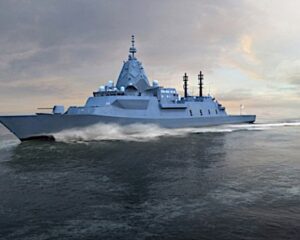
‘Bloat and warfare’: the Hunter class frigate and the trend toward ever-more complicated and expensive weapons
Why do weapons platforms keep getting bigger, more complicated, and more costly? In ‘Bloat and Warfare’ Jacob Parakilas makes some interesting observations about Canada’s new frigates, which are, like Australia’s proposed Hunter class frigates, based on the BAE Systems Type 26 frigate design.
Read more
Pentagon’s China task force to review strategy toward China
In remarks to Defense personnel on Wednesday, 10 February 2021, US President Biden said that a Pentagon ‘China task force’ will, within the next few months, review the US’s “[defense] strategy and operational concepts, technology, and force posture, and so much more”. Recommendations on key priorities and decision points are expected to enable the US to “chart a strong path forward on China-related matters”.
Read more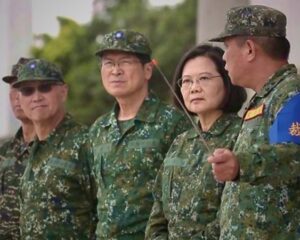
Taiwan: a ‘wicked’ strategic problem for Australia
For Australia, the question of Taiwan remains a ‘wicked’ strategic problem. The Taiwanese have over time established strong claims for their autonomy. The US has a huge investment in Taiwan’s security, while not denying it is part of China. And defence of Taiwan could see the island devastated, the ANZUS alliance become irrelevant, and Australia’s security lost. Why would Australia go to war over Taiwan?
Read more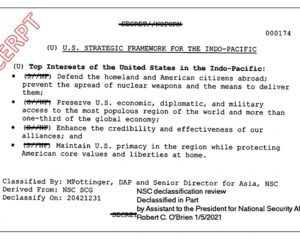
The curious case of the ‘United States Strategic Framework for the Indo-Pacific’
On 12 January 2021, the then US National Security Advisor, Robert O’Brien, released a declassified document titled the United States Strategic Framework for the Indo-Pacific. The document was declassified for release on 5 January 2021, thirty years before this was due, in the last days of the outgoing Trump Administration. What should an Australian analyst make of this document?
Read more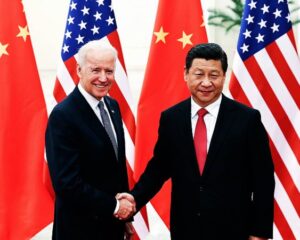
A China strategy to reunite America’s allies (Chatham House)
China already has significant geopolitical and economic clout in Asia and beyond – especially through the Belt and Road Initiative, its massive investment program in global infrastructure, and commercial development. Economic decoupling is not in the offing; China is far too integrated into the global economy. So is there a “China strategy” that would reunite the US and its democratic partners?
Read more
China-Australia decoupling? ASPI float a hydrogen balloon
It will become increasingly the case that if Australia doesn’t address the demands of the next economy, its prosperity, and therefore its security, will decline. In this context the development of an Australian clean steel industry using green hydrogen, proposed by ASPI’s Michael Shoebridge, looks enticing. But is it feasible of itself, let alone as part of decoupling from China’s economy? Or is it a distraction from the real economic and security issues facing Australia?
Read more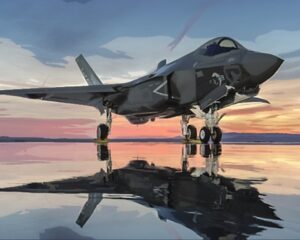
The deceit of deterrence: a bankrupt strategic justification for defence expenditure
One of Australia’s three key strategic objectives is to “deter actions against our interests”, although what this means in practice is largely unexamined. Yet the concept of deterrence is frequently used to justify acquiring expensive, high-tech weapons platforms and systems. But what does the government envisage the submarines, new naval vessels, F-35s, and variety of long-range missiles will deter? In Australia’s strategic circumstances, what part can deterrence play in its strategic policy?
Read more
US-Japan alliance: experts point to America’s strategic reliance on Japan in Asia
Richard Armitage and Joseph Nye, long time pillars of the Washington national security policy elite, are the lead authors of a new report from CSIS on the US-Japan alliance, with a suggested “new agenda for the challenges and opportunities on the horizon”. It is deeply refreshing to see them acknowledge, albeit somewhat wistfully, that there is no going back to US hegemony. To exercise influence the US will have to partner with other states.
Read more
The US-Japan alliance in 2020: an equal alliance with a global agenda (Armitage-Nye)
Richard Armitage and Joseph Nye have led a team to produce a new “bipartisan Armitage-Nye” report on the state of the US-Japan alliance, seen as critical to addressing both regional and global challenges. On the question of China and US strategy in Asia, the report is both entirely predictable and refreshingly surprising.
Read more
Strategic capitalism, strategic autonomy and Australia
The Biden administration will be unable to avoid continuing America’s fierce competition with China. It also will find that, like-minded and democratic or not, most states will have distinct national interests and will seek to act autonomously, dancing between the feet of the battling giants, trying to extract or leverage the best price for their allegiance and alignment in the Chinese-US competition. With a deep past investment in the US hegemony, Australia is awkwardly placed as this new age of strategic capitalism unfolds.
Read more
Australia, US formally partner on SCIFiRE hypersonic missile program
On 1 December 2020, Australia announced a formal agreement to partner with the United States on the development and testing of “hypersonic cruise missile prototypes”.
Read more
The metrics of strategic competition with China don’t add up
The recent Belfer Center report by RAAF Group Captain Jason Begley, Winning Strategic Competition in the Indo-Pacific, offers important insights into the strategic thinking of the Australian military. The author’s analysis of the strategic competition with China in which the US and Australia have engaged far surpasses the level of the policy arguments offered in the Australian government’s 2020 Defence Strategic Update.
Read more
Afghanistan and beyond: for moral certainty, war is the solvent
The brutal reality of war never features in political discussions of strategic and defence policy. How many non-combatants in foreign countries is it moral to kill, displace, or impoverish in order protect or preserve some objective, principle or values? In ministerial offices and cosy think tank suites, distant from the ruined cities, refugee camps, and destroyed lives, decision makers and advisers should think on these things.
Read more
The open secret of US war plans: what does Australia know?
The influence of the US in Eurasia will continue to falter, and as its economic, diplomatic, and moral potency dwindles, America’s military will become its primary asset. In America’s strategic logic, loss of leadership demands a military response – and the nature of the military preparations for war on a recognised emerging Asia hegemon are now well known. While the trajectory to war is not irreversible, and the step to launching a war is huge, the consequences would be calamitous. Is Australia complicit in the preparations?
Read more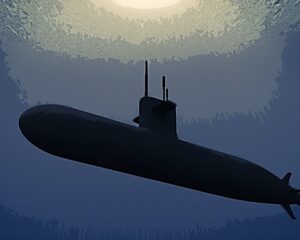
ASPI’s guide to submarines leaves the biggest strategic questions unanswered
ASPI’s Special Report; submarines, your questions answered aims to “become the go-to guide for authoritative comment on all things to do with the present and future of Australian submarines”. However, rather than clarify the issues around submarine warfare and the Attack class, it raises more questions than it answers. That’s not to deny that there are important contributions in the report from Andrew Davies, Marcus Hellyer, Malcolm Davis, and others.
Read more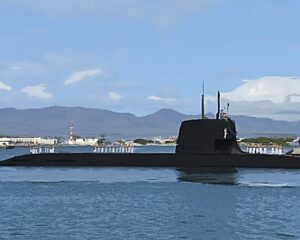
Sustaining an undersea advantage: Hudson Institute anti-submarine warfare report
The spotlight is back on Australia’s future submarine program, SEA1000. The Hudson Institute report Sustaining the Undersea Advantage: Disrupting Anti-Submarine Warfare Using Autonomous Systems is an excellent introduction to the history of anti-submarine warfare, and to some recent transformational developments in its conduct. It will help readers understand the long history of undersea warfare and how past experience has made older concepts hard to shift.
Read more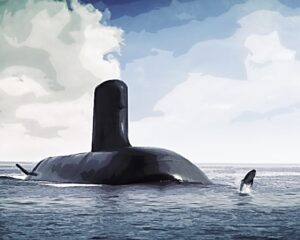
Exaggerated threats and contrived military strategies shouldn’t drive Defence spending: a response to Jon Stanford
In a series of three articles, Jon Stanford has argued that Australia needs “a sound military strategy to deter an attack by a great power and careful analysis of how to design the right force structure to deliver it”. An external, more ‘neutral’ review of Australia’s military strategy is proposed. But it is not clear that Australia needs a new military strategy – let alone one that would require a 50 % increase in the Defence budget.
Read more